The useful question is not whether a website should become complicated. It is whether the organisation can build today without closing off what it may need tomorrow.
The brochure is not the problem
A brochure website can be exactly the right answer. If the job is to explain a company clearly, establish credibility and create a simple route to contact, adding accounts, dashboards and workflows would only introduce unnecessary weight.
The problem begins when the website is treated as a dead end. The organisation improves the front door, but every useful action behind it still falls into email, spreadsheets, disconnected forms or manual follow-up.
Think in layers, not in pages
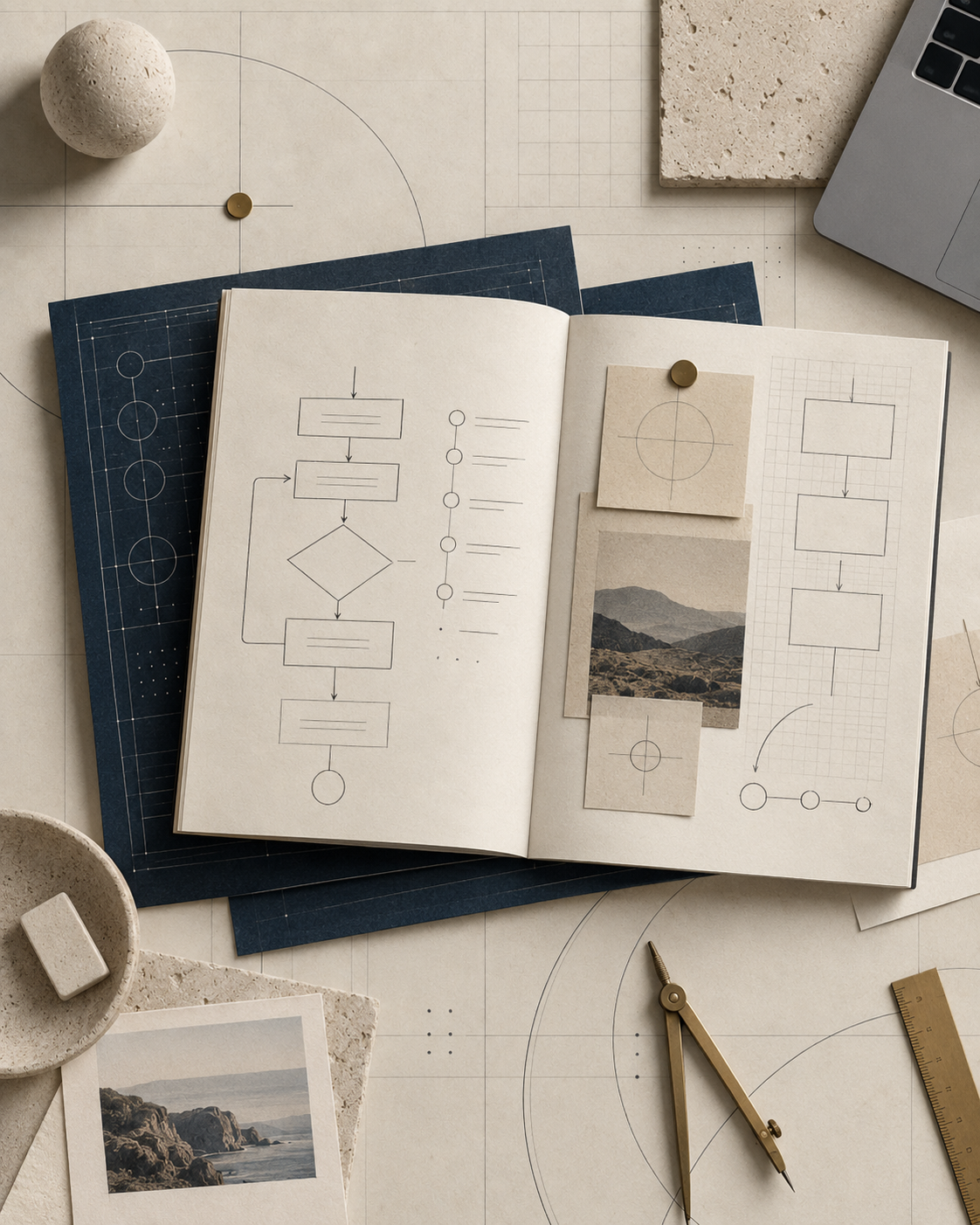
A useful digital foundation separates what the visitor sees from what may grow underneath it later. Content, identity, search, comparison, enquiry, account state, booking, payments and operational follow-up do not all need to exist on day one. But they should not be made unnecessarily difficult to add later.
Build the smallest useful first layer
The right first release is usually smaller than the eventual system. A high-quality company site can go live now while the information model, URL structure, content types and integration boundaries are designed so that later capability has somewhere sensible to attach.
This is particularly important when a company already knows that its website will eventually carry more than marketing. A destination business may later need planning and booking. A technical business may later need requirement capture and evidence. A managed service may later need customer state and operational visibility.
Preserve the quality of the surface
Growth should not make the website feel increasingly like back-office software. The public layer should remain calm, legible and editorially strong even as more capability appears underneath it.
That means resisting the temptation to expose every field, rule and internal status to the customer. The system should carry the complexity so the user does not have to.
When not to turn the website into a platform
There is also a discipline in stopping. If the process can be handled well through a simple contact path and human follow-up, forcing it into a self-service workflow may reduce rather than increase value.
The test is straightforward: does the additional digital layer make the customer’s task clearer or the organisation’s work materially better? If not, it is probably not yet worth building.